

Description
Residence time in a tubular reactor is determined by tube volume and volumetric flow rate (τ = V/Q), and is independent of reaction kinetics — making scale-up from laboratory to production straightforward when the Damköhler number and Reynolds number are maintained. Temperature control is achieved through external jacketing of the tube coil, immersion of the coil in a thermostatic bath, or integration with a plate heat exchanger block. For gas–liquid reactions, tubular reactors can be operated in segmented (slug) flow or annular flow regimes, with slug flow providing excellent mass transfer between the phases while maintaining plug-flow characteristics in the liquid slugs
For reactions requiring solid catalyst contact, packed-bed tubular reactors are used — the tube is charged with heterogeneous catalyst particles (typically 0.5–3 mm diameter) and the reagent stream flows through the packed bed under pressure. Catalyst replacement, regeneration, and monitoring are accomplished through upstream/downstream sample ports and pressure drop measurement. High-pressure tubular reactor systems — capable of operating at up to 300 bar and 350°C — enable superheated reactions in normally low-boiling solvents (e.g., reactions in water at 200°C under sufficient back pressure), hydrogenation reactions with gas charging, and reactions requiring dissolved gas at elevated partial pressure.
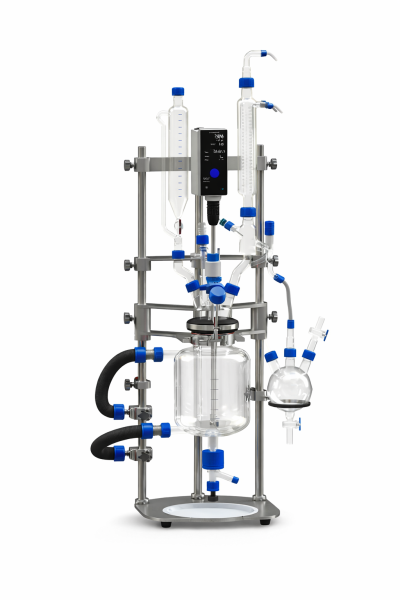
Key Features
- True plug-flow behaviour — all fluid elements experience identical residence time
- Coiled designs for compact footprint with long residence time
- Straightforward scale-up via diameter and length increase
- Multi-pass jacketed designs for precise thermal control
- High P/T access — superheated reactions in standard solvents
- Gas-liquid slug flow for biphasic chemistry at elevated pressure
- Packed-bed variant for heterogeneous catalysis at scale
- Inline sampling ports and thermocouple tappings along reactor length
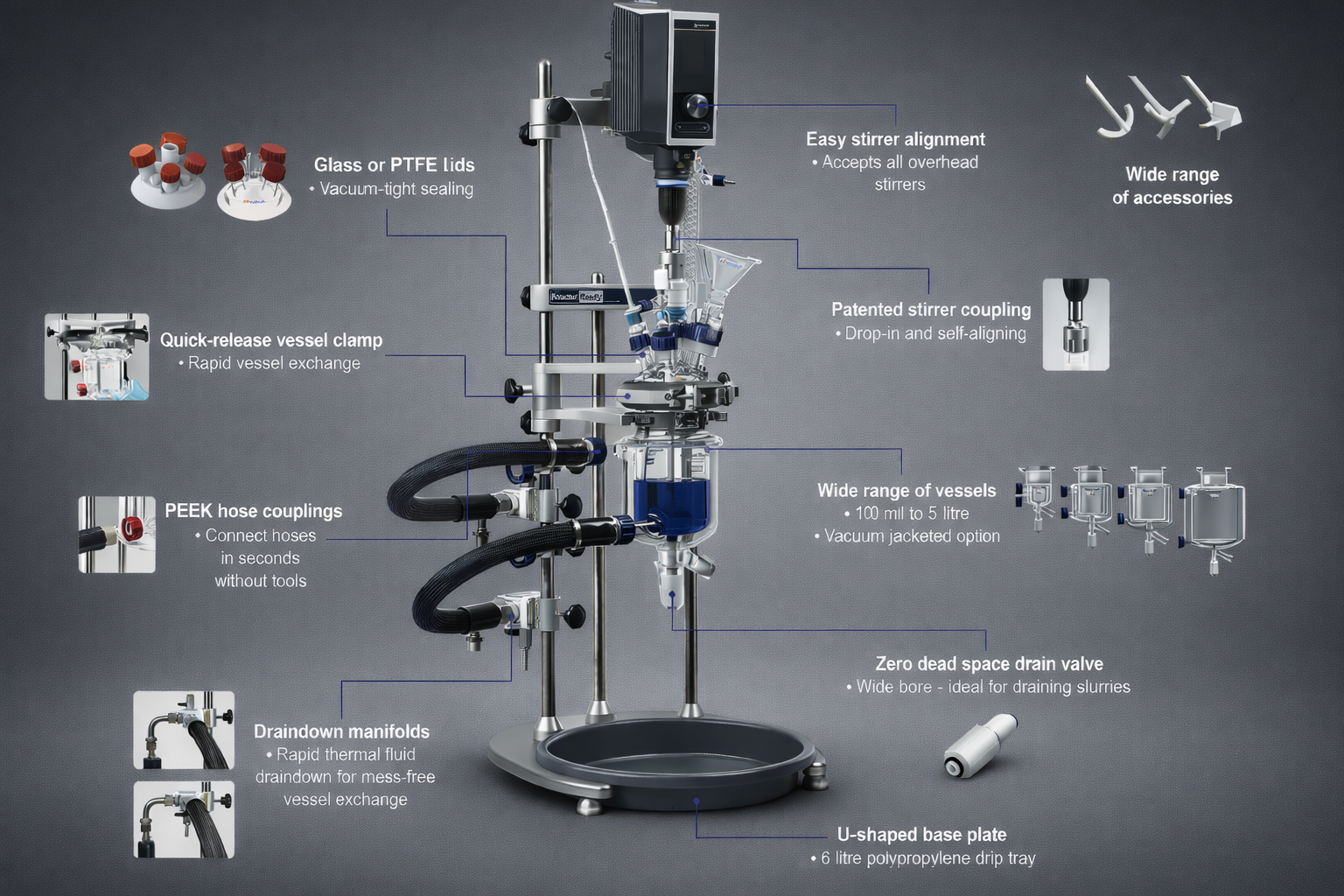
Technical Specifications
| Internal Diameter | 1 mm to 200 mm (standard range) |
| Materials of Construction | SS 316L, Hastelloy C-276, PTFE, PFA, Titanium, Zirconium |
| Maximum Operating Pressure | Up to 300 bar (ASME/PED rated designs) |
| Temperature Range | −100°C to +350°C |
| Reactor Volume | 0.5 mL to 50 L (scalable through diameter and length) |
| Residence Time | 30 s to several hours |
| Flow Regime | Laminar, slug flow, turbulent (Re-dependent) |
| Packed Bed Option | Catalyst pellets, resin, or immobilised enzyme packing |
| Heat Exchange | Jacket, bath immersion, or integrated plate HX design |
| Gas–Liquid Capability | Segmented slug flow or pressurised dissolved-gas modes |
Industrial Applications
- Thermal rearrangements, Claisen, and Diels-Alder reactions at high temperature
- Heterogeneous catalytic hydrogenation, oxidation, and reduction
- Gas–liquid reactions: hydroformylation, carbonylation, ozonolysis
- Free-radical polymerisation under controlled initiation
- Continuous peptide bond formation and protecting group chemistry
- High-temperature hydrolysis, esterification, and transesterification
If you need process solution... We are available for you
Submit your reaction parameters, operating pressure, temperature range, and material compatibility requirements. Our engineering team will recommend the appropriate configuration.