

Description
Photoflow reactors address the light penetration problem fundamentally: by processing the reaction stream in a thin film or narrow-channel geometry (typically 0.5–3 mm path length), every molecule in the flow stream is exposed to near-uniform irradiation throughout its entire residence time in the irradiation zone. This thin-geometry approach allows the use of higher reagent concentrations than batch photochemistry, shortens reaction times by orders of magnitude (from hours to minutes or seconds), and provides far more reproducible photon dosing than batch lamp systems subject to lamp degradation and hot spots.
Light sources in photoflow reactors are predominantly high-output LEDs (wavelength-selectable across 365–730 nm, with green, blue, and violet LEDs covering the primary photoredox catalysis absorption windows) or UV lamps (254 nm, 302 nm, 365 nm) for direct substrate excitation. LED light sources have eliminated many of the practical disadvantages of older mercury arc lamp systems — LEDs produce narrow-band emission at the precise wavelength required, consume a fraction of the electrical power, have lifetimes exceeding 50,000 hours, and produce no UV-C or ozone. The reactor channel is typically fabricated in transparent fluoropolymer (FEP, PFA) tubing or glass, wrapped around or sandwiched between the LED arrays to maximise irradiance across the full reactor volume.
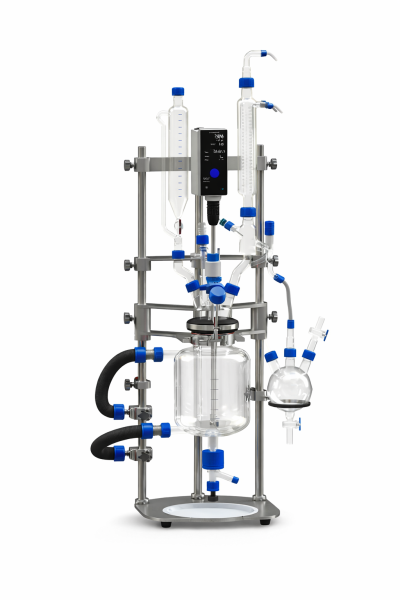
Key Features
- ±0.5% flow accuracy — critical for reagent stoichiometry in continuous synthesis
- Closed-loop Coriolis flow control for density-compensated mass flow
- Dual-head piston designs deliver near-pulsation-free flow
- ATEX-rated designs for solvent-handling in hazardous area locations
- Full range of corrosion-resistant wetted materials for aggressive media
- Integrated overpressure protection and dry-run detection
- Syringe pump precision for micro-flow catalyst and initiator delivery
- Remote control and data logging for GMP process documentation
Technical Specifications
| Reactor Geometry | Coiled tube, flat-bed plate, or annular design |
| Channel/Tube Diameter | 0.5–3.0 mm (thin-film irradiation zone) |
| Light Sources | High-output LEDs (365–730 nm) or UV lamps (254–365 nm) |
| Available Wavelengths | 365, 385, 405, 450, 470, 520, 530, 590, 627, 660 nm (LED) |
| Irradiance | 100–2000 mW/cm² (application dependent) |
| Materials of Construction | FEP/PFA tubing, borosilicate glass, SS housing |
| Temperature Control | Integrated cooling plate or flow-through cooler (LED heating management) |
| Reactor Volume | 0.5 mL (development) to 500 mL (production modules) |
| Pressure Rating | Up to 10 bar (PTFE fittings design) |
Industrial Applications
- Photoredox catalysis (Ru(bpy)₃, Ir(ppy)₃, 4CzIPN) for C–C and C–N bond formation
- Singlet oxygen oxidations (rose bengal or eosin Y sensitisation)
- Norrish reactions, Paterno-Büchi [2+2] cycloadditions
- [2+2] and [4+2] photocycloadditions in natural product synthesis
- UV-driven radical chain reactions: thiol-ene, atom transfer radical addition
- Photodeprotection reactions in oligonucleotide and peptide synthesis
If you need process solution... We are available for you
Submit your reaction parameters, operating pressure, temperature range, and material compatibility requirements. Our engineering team will recommend the appropriate configuration.