
Precious Metal Refining Plant
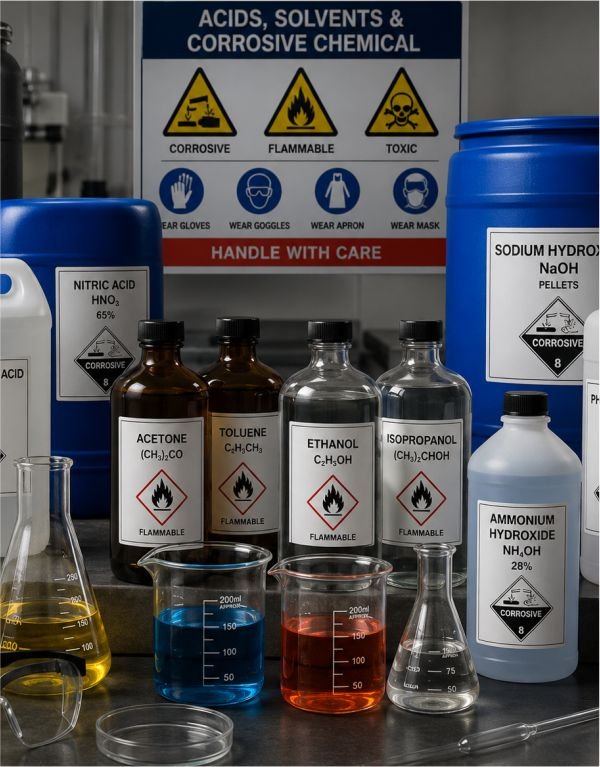
The Global Antico Precious Metal Refining Plant is a fully integrated hydrometallurgical processing system for the refining of gold, silver, platinum group metals (PGM — platinum, palladium, rhodium, iridium, ruthenium), and associated precious metal alloys from a wide range of feed materials including jewellery scrap, electronic waste, spent catalysts, dental alloys, and mining concentrates. The plant combines chemical dissolution, selective precipitation, solvent extraction, and electrorefining technologies into a sequential refining flowsheet engineered for maximum metal recovery with minimum process reagent consumption. For gold refining, the primary route is aqua regia dissolution (HNO₃ + HCl), followed by selective precipitation as AuCl₃ using sodium metabisulphite, filtration, and smelting to produce 999.9 fine gold.
Silver refining is achieved via electrolytic Möbius or Balbach-Thum cell systems producing silver of 999.0+ fineness. For PGM-bearing materials, selective dissolution and solvent extraction or selective precipitation sequences separate platinum, palladium, rhodium, and other PGMs into individual pure fractions. Fume management is a critical safety engineering feature — dedicated HNO₃ and HCl acid fume scrubbers, NOx abatement columns, and enclosed vessel designs prevent personnel exposure and atmospheric emissions. A precious metal accounting system incorporating process weighing, sampling, and assay management provides full batch traceability and metal yield reporting essential for high-value material accountability. The plant is modular in design, scalable from 5 kg/day to 500+ kg/day precious metal throughput.
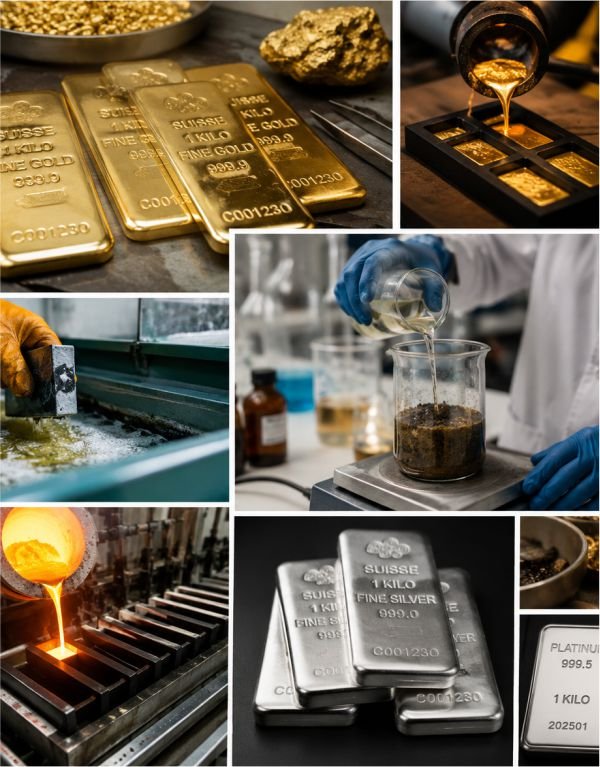
- Gold Output Purity 999.9 Fine (LBMA standard)
- Silver Purity 999.0+ Fine (electrolytic)
- Overall PGM Recovery >99.5% Au, Ag, Pt, Pd
- Feed Materials Scrap / E-Waste / Catalysts / Alloys
- Capacity Range 5 kg/day – 500+ kg/day PM
- Modules Modular cells — scalable
Key Features
-
Aqua regia dissolution circuit with controlled HNO₃/HCl dosing
Aqua regia dissolution circuit with controlled HNO₃/HCl dosing
-
Selective precipitation of gold (AuCl₃) using metabisulphite
Selective precipitation of gold (AuCl₃) using metabisulphite
-
Electrolytic silver refining cells (Möbius / Balbach-Thum)
Electrolytic silver refining cells (Möbius / Balbach-Thum)
-
PGM solvent extraction and selective precipitation circuits
PGM solvent extraction and selective precipitation circuits
-
Dedicated acid fume scrubbers (HNO₃, HCl, NOx)
Dedicated acid fume scrubbers (HNO₃, HCl, NOx)
-
Fully enclosed vessel design for personnel protection
Fully enclosed vessel design for personnel protection
System Components
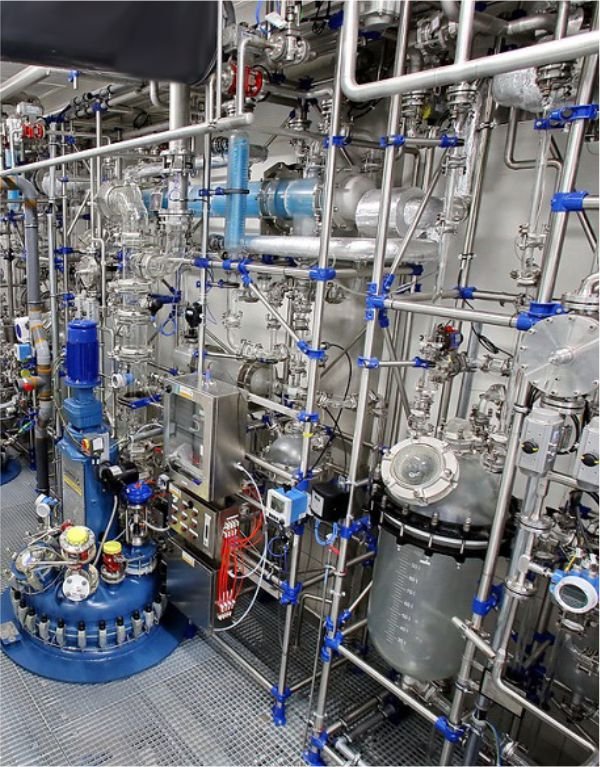
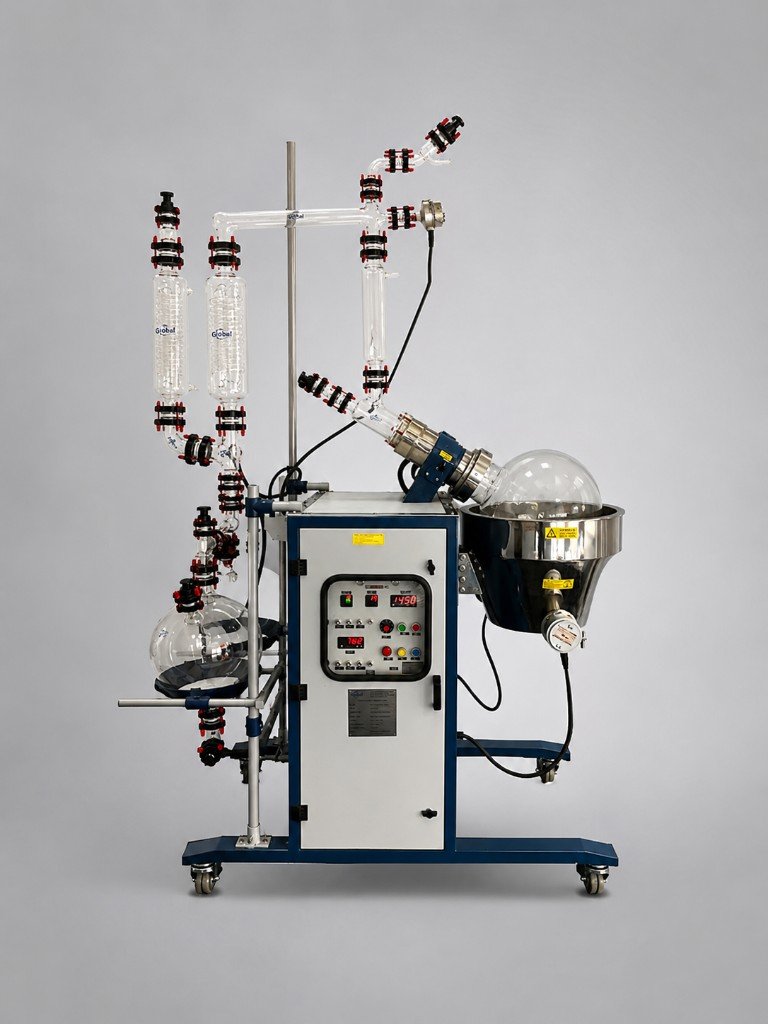
Modular assemblies engineered for reliable integration, service access, and scale-up from laboratory to pilot plant operation.
Applications
- Jewellery and gold refinery operations
- Electronic waste (e-waste) precious metal recovery
- Spent industrial and automotive catalyst recycling
- Dental alloy and laboratory precious metal reclaim
- Mining and hydrometallurgical PGM concentration
- Precious metal trading and bullion production
- Oil & gas processing
- Water treatment
Technical Specifications
| Parameter | Specification |
|---|---|
| Gold Output Purity | 999.9 Fine (LBMA standard) |
| Silver Purity | 999.0+ Fine (electrolytic) |
| Overall PGM Recovery | >99.5% Au, Ag, Pt, Pd |
| Feed Materials | Scrap / E-Waste / Catalysts / Alloys |
| Capacity Range | 5 kg/day – 500+ kg/day PM |
| Modules | Modular cells — scalable |
| Fume Control | HNO₃/HCl scrubbers + NOx column |
| Accountability | PM weighing + assay management |
| Performance Guarantee | Performance Guarantee: Minimum 99.5% recovery of target precious metals from specified feed materials. Output purity meeting LBMA or client specification — verified by fire assay / ICP-MS by accredited laboratory at commissioning. |
Related Products
FAQ
What capacity range is available for Precious Metal Refining Plant?
We offer project-specific sizing from laboratory benchtop scale through pilot and production volumes. Contact our engineers with your batch size and process requirements for a tailored recommendation.
Can this unit be integrated with existing plant automation?
Yes. All systems support standard instrumentation signals and can interface with DCS, PLC, or standalone controllers. Custom I/O and recipe control packages are available.
What material options are available?
Borosilicate glass, glass-lined steel, stainless steel, and specialty alloys including Hastelloy can be specified based on your process chemistry, temperature, and pressure requirements.
Do you provide installation and commissioning?
Global Lindus provides on-site installation supervision, commissioning, operator training, and optional IQ/OQ documentation for regulated industries.
What is the typical delivery lead time?
Standard configurations ship in 4–8 weeks. Custom skid assemblies and large production units may require 12–16 weeks depending on scope and material availability.