
Sulphuric Acid Concentration
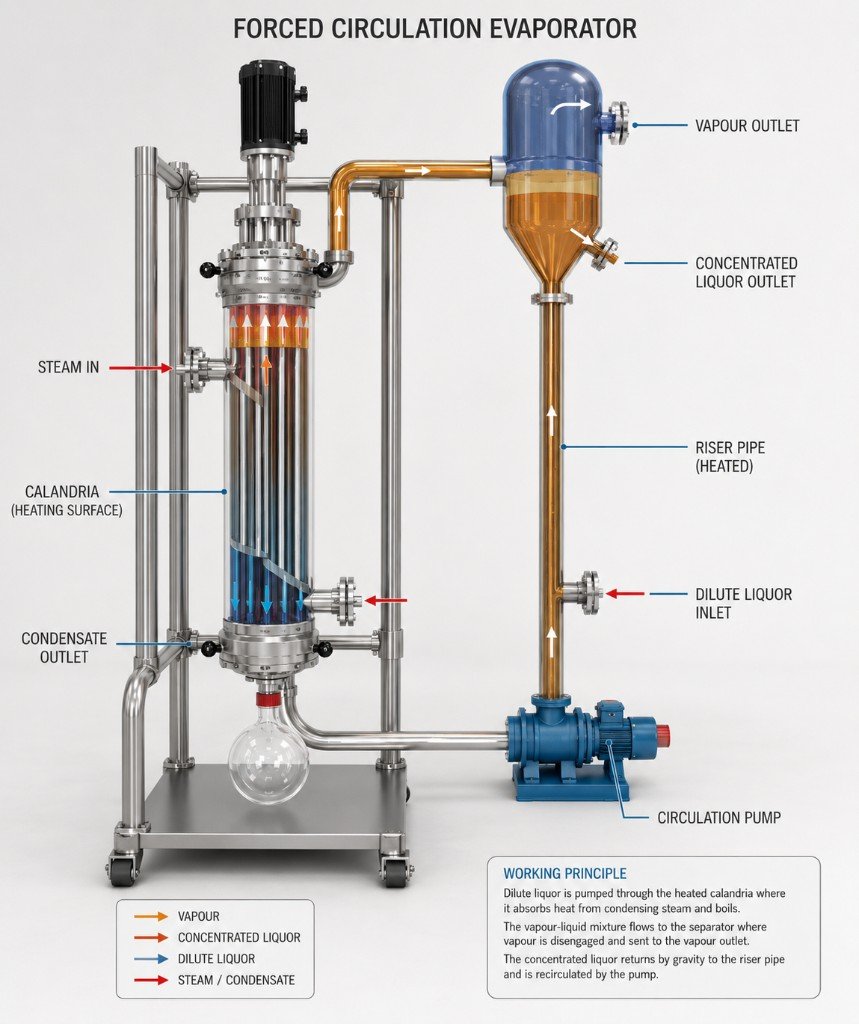
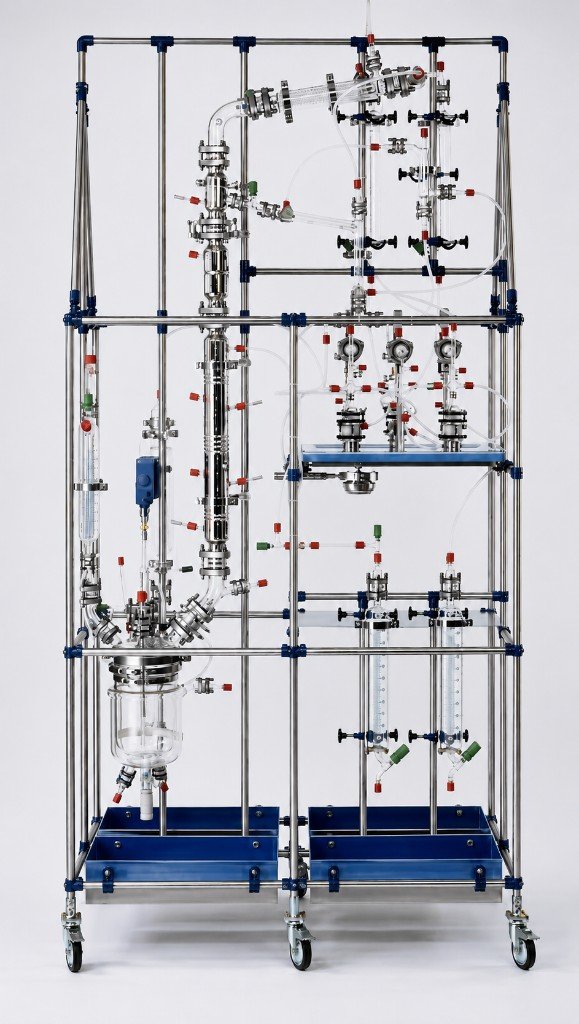
The Global Antico Sulphuric Acid Concentration Plant is a high-performance vacuum evaporation system engineered to concentrate dilute sulphuric acid streams — typically 20–70% H₂SO₄ from industrial processes — up to commercial concentrations of 96–98%+ w/w. The process exploits the boiling point elevation of H₂SO₄ under reduced pressure, allowing water removal at significantly lower temperatures than atmospheric evaporation, preserving equipment integrity and reducing energy consumption. The dilute acid feed is introduced into a falling-film or forced-circulation evaporator where vacuum is maintained by a two-stage ejector or liquid ring vacuum system. Water vapour liberated during evaporation is drawn off and condensed, while concentrated acid is progressively recycled through the evaporator until the target concentration is achieved.
Heat input to the evaporator is provided by steam, hot water, or waste heat via indirect heating through acid-resistant heat transfer surfaces — typically tantalum tube bundles, borosilicate glass, or silicon carbide (SiC) shell-and-tube exchangers. An acid-mist scrubbing system downstream of the vacuum condenser captures acid carry-over before non-condensable gas is vented. An integrated heat recovery loop — using condensate heat to pre-warm incoming dilute acid — improves overall thermal efficiency by 25–35%. The plant operates continuously with automatic concentration monitoring via inline density measurement or refractometry, and automatic feed/draw-off rate adjustment. Available capacities range from 500 kg/day to 50,000 kg/day of concentrated acid output. Optional crystallization prevention heating circuits are included for high-concentration operation above 93% H₂SO₄.
- Output Concentration Up to 98%+ H₂SO₄
- Feed Concentration 20% – 80% H₂SO₄ (dilute acid)
- Capacity Range 500 – 50,000 kg/day output
- Heat Transfer Material Tantalum / SiC / Borosilicate Glass
- Evaporator Type Falling Film / Forced Circulation
- Energy Recovery 25–35% via heat integration
Key Features
-
Vacuum evaporation enabling low-temperature concentration
Vacuum evaporation enabling low-temperature concentration
-
Tantalum, SiC, or borosilicate glass heat exchangers
Tantalum, SiC, or borosilicate glass heat exchangers
-
Acid-mist scrubbing system on non-condensable vent
Acid-mist scrubbing system on non-condensable vent
-
Integrated heat recovery — condensate to feed pre-heat
Integrated heat recovery — condensate to feed pre-heat
-
Continuous operation with automatic concentration control
Continuous operation with automatic concentration control
-
Inline density / refractometry monitoring and control
Inline density / refractometry monitoring and control
System Components
Modular assemblies engineered for reliable integration, service access, and scale-up from laboratory to pilot plant operation.
Applications
- Fertilizer grade sulphuric acid production and regeneration
- Battery acid (electrolyte) concentration to specification
- Rayon and textile fibre manufacturing
- Metals processing and pickling acid recovery
- Refinery spent acid regeneration programs
- Industrial effluent ZLD — dilute acid recovery and reuse
- Oil & gas processing
- Water treatment
Technical Specifications
| Parameter | Specification |
|---|---|
| Output Concentration | Up to 98%+ H₂SO₄ |
| Feed Concentration | 20% – 80% H₂SO₄ (dilute acid) |
| Capacity Range | 500 – 50,000 kg/day output |
| Heat Transfer Material | Tantalum / SiC / Borosilicate Glass |
| Evaporator Type | Falling Film / Forced Circulation |
| Energy Recovery | 25–35% via heat integration |
| Concentration Control | Inline density / refractometry |
| Emission Control | Acid mist scrubber on vent |
| Performance Guarantee | Performance Guarantee: Output acid concentration ≥96% H₂SO₄ at rated throughput with <100 ppm total impurities. Specific energy consumption per tonne of water evaporated — contractually bounded and measured at SAT. |
Related Products
FAQ
What capacity range is available for Sulphuric Acid Concentration?
We offer project-specific sizing from laboratory benchtop scale through pilot and production volumes. Contact our engineers with your batch size and process requirements for a tailored recommendation.
Can this unit be integrated with existing plant automation?
Yes. All systems support standard instrumentation signals and can interface with DCS, PLC, or standalone controllers. Custom I/O and recipe control packages are available.
What material options are available?
Borosilicate glass, glass-lined steel, stainless steel, and specialty alloys including Hastelloy can be specified based on your process chemistry, temperature, and pressure requirements.
Do you provide installation and commissioning?
Global Lindus provides on-site installation supervision, commissioning, operator training, and optional IQ/OQ documentation for regulated industries.
What is the typical delivery lead time?
Standard configurations ship in 4–8 weeks. Custom skid assemblies and large production units may require 12–16 weeks depending on scope and material availability.