
Reactive Distillation Unit
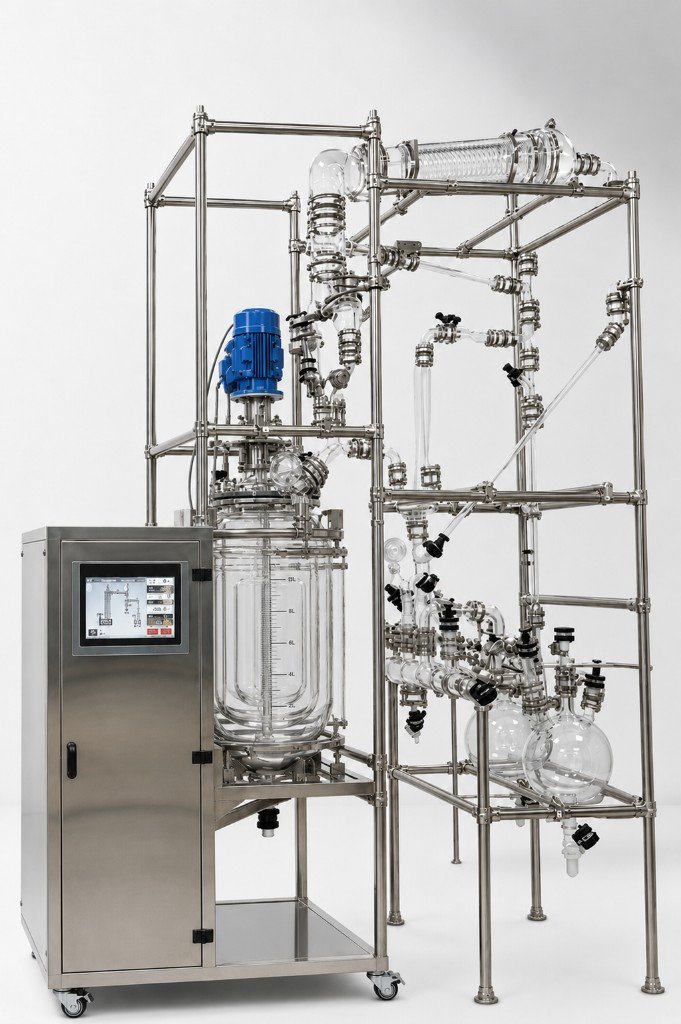
ANTICO ReactiDist™ integrates chemical reaction and distillation into a single process unit for enhanced efficiency. The working principle involves simultaneous reaction and separation, where products are continuously removed to drive reaction equilibrium forward. The system includes a reactive column, catalyst zones, reboiler, condenser, and reflux system. It is used for equilibrium-limited reactions such as esterification and etherification. This integration reduces the need for multiple equipment units and lowers capital cost.
It improves conversion and selectivity of reactions. The system allows continuous operation with high process intensification. It is widely used in specialty chemicals and petrochemical industries. The design enhances energy efficiency and reduces operational complexity. ANTICO ReactiDist™ enables compact and high-performance process solutions.
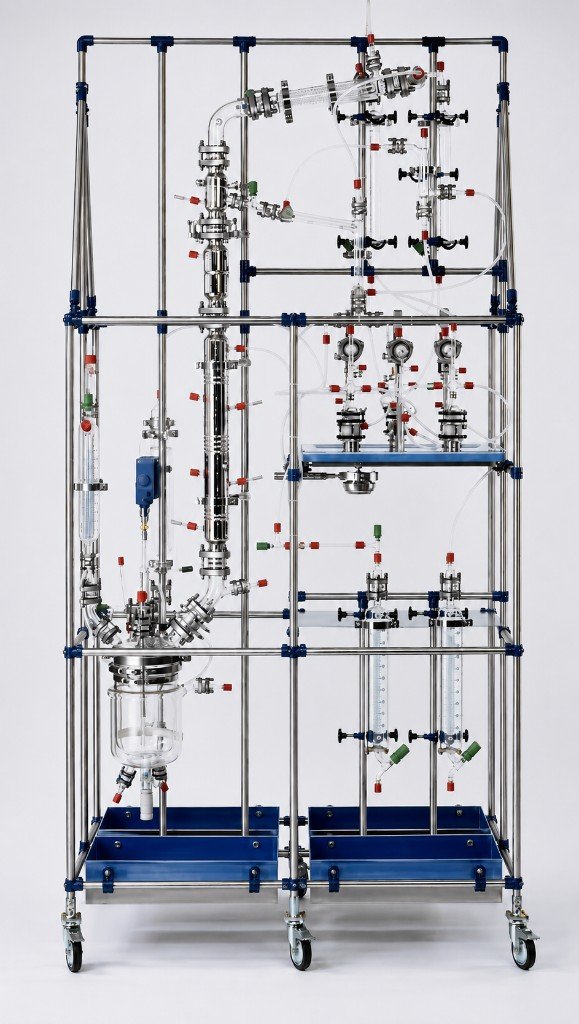
- Type Combined Reaction + Distillation System
- Capacity 5 – 2000 L/hr
- MOC (Wetted Parts) Borosilicate Glass 3.3 / SS Grades / Glass-li…
- Column Type Packed Column with Catalytic Sections
- Catalyst Type Solid Catalyst (Resin / Structured Packing)
- No. of Stages 10 – 50+ (Reaction + Separation Zones)
Key Features
-
Simultaneous reaction and separation
Simultaneous reaction and separation
-
Improved conversion efficiency
Improved conversion efficiency
-
Reduced equipment footprint
Reduced equipment footprint
-
Energy savings
Energy savings
-
Engineered for Reliable Operation
Built for demanding chemical and pharmaceutical process environments.
-
Engineered for Reliable Operation
Built for demanding chemical and pharmaceutical process environments.
System Components
Modular assemblies engineered for reliable integration, service access, and scale-up from laboratory to pilot plant operation.
Applications
- Petrochemicals
- Esterification processes
- Biodiesel production
- Specialty chemicals
- Food & beverage processing
- Academic & government research
- Oil & gas processing
- Water treatment
Technical Specifications
| Parameter | Specification |
|---|---|
| Type | Combined Reaction + Distillation System |
| Capacity | 5 – 2000 L/hr |
| MOC (Wetted Parts) | Borosilicate Glass 3.3 / SS Grades / Glass-lined Steel / Hastelloy |
| Column Type | Packed Column with Catalytic Sections |
| Catalyst Type | Solid Catalyst (Resin / Structured Packing) |
| No. of Stages | 10 – 50+ (Reaction + Separation Zones) |
| Operation Mode | Continuous / Semi-batch |
| Design Pressure | Vacuum to +5 barg |
| Operating Temperature | Ambient to 250°C |
| Reflux System | Adjustable / Automatic Control |
| Reboiler Type | Kettle / Thermosiphon |
| Condenser Type | Shell & Tube / Surface Condenser |
| Heat Integration | In-situ Heat Utilization (Reaction + Separation) |
| Instrumentation | Temp Profile, Pressure, Flow, Composition (optional) |
| Automation | PLC / SCADA with Advanced Control |
| Conversion Efficiency | High (equilibrium shift via continuous separation) |
| Applications | Esterification, Etherification, Alkylation, Specialty Chemicals |
Related Products
FAQ
What capacity range is available for Reactive Distillation Unit?
We offer project-specific sizing from laboratory benchtop scale through pilot and production volumes. Contact our engineers with your batch size and process requirements for a tailored recommendation.
Can this unit be integrated with existing plant automation?
Yes. All systems support standard instrumentation signals and can interface with DCS, PLC, or standalone controllers. Custom I/O and recipe control packages are available.
What material options are available?
Borosilicate glass, glass-lined steel, stainless steel, and specialty alloys including Hastelloy can be specified based on your process chemistry, temperature, and pressure requirements.
Do you provide installation and commissioning?
Global Lindus provides on-site installation supervision, commissioning, operator training, and optional IQ/OQ documentation for regulated industries.
What is the typical delivery lead time?
Standard configurations ship in 4–8 weeks. Custom skid assemblies and large production units may require 12–16 weeks depending on scope and material availability.